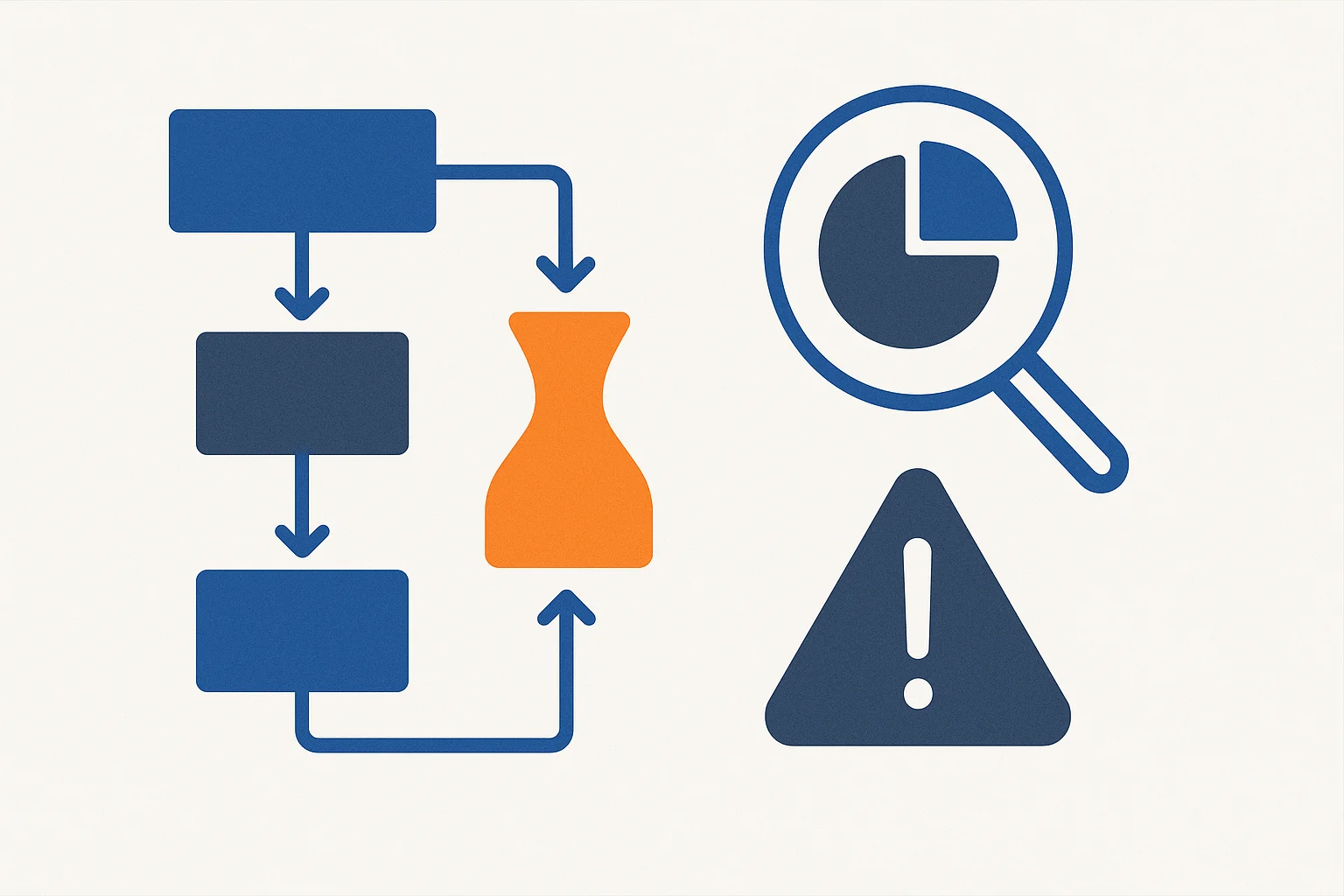
Your workers are present, but productivity is low. Materials are available, but work is slow. The problem? Hidden bottlenecks eating 15-20% of your productive time. A contractor app with progress tracking can help identify these bottlenecks. Here's how to find and fix them.
What Are Bottlenecks?
Definition: Any constraint that limits your site's productivity.
The effect: Like a bottle's narrow neck limiting water flow, bottlenecks limit work flow regardless of resources available.
Common signs:
- Workers standing idle
- "Waiting for..." excuses
- Uneven progress across tasks
- Resources unused
- Delays without clear cause
Types of Construction Bottlenecks
1. Resource Bottlenecks
Material shortages:
- Cement arrives late → masons idle
- Wrong tiles delivered → tile work stops
- Insufficient scaffolding → height work delayed
Equipment unavailable:
- Only one mixer → teams waiting turn
- Lift broken → material movement slows
- No scaffolding → can't access work areas
Labor shortages:
- Not enough skilled workers → work accumulates
- Key worker absent → specialized work stops
- Team size mismatch → inefficient deployment
2. Process Bottlenecks
Sequential dependencies:
- Can't plaster until masonry dries
- Can't paint until plaster cures
- Can't finish until structure complete
Approval delays:
- Waiting for client approval to proceed
- Inspection pending → next phase blocked
- Drawing clarifications needed
Information gaps:
- Unclear specifications → work can't start
- No drawing details → team waiting
- Changed requirements → rework needed
3. Coordination Bottlenecks
Communication failures:
- Supervisor doesn't inform about delays
- Teams not aware of dependencies
- Client expectations misaligned
Scheduling conflicts:
- Two teams need same space
- Materials arrive when no labor available
- Equipment scheduled elsewhere
How to Identify Bottlenecks
Method 1: Direct Observation
What to do: Spend 2-3 hours observing site.
What to look for:
- Workers standing around
- Equipment sitting unused
- Materials piled but not used
- Activity in some areas, none in others
- People waiting for others
When: Random times, not just morning. Bottlenecks often appear mid-day.
Record: Note time, location, people affected, apparent reason.
Method 2: Worker Conversations
Ask workers: "What stops you from working faster?"
Common answers reveal bottlenecks:
- "Waiting for materials" → Supply chain issue
- "Waiting for Mason Ji to finish" → Skill/resource shortage
- "Not sure what to do next" → Communication issue
- "No space to work" → Coordination issue
- "Equipment not available" → Resource constraint
Pro tip: Workers know the problems. Just ask.
Method 3: Task Completion Analysis
Track: How long each task actually takes vs should take.
Example:
- Brick work: Should take 3 days → Actually took 7 days
- Why? Workers idle day 2 (no cement), day 4-5 (waiting for electrician to finish conduit)
Pattern analysis:
- If EVERYTHING is slow → Systematic issue (team skill, management)
- If SPECIFIC tasks slow → Bottleneck in that process
Method 4: Idle Time Tracking
Simple method:
- Count workers present
- Count workers actively working
- Difference = idle workers
- Ask why they're idle
Example:
- 25 workers present
- 18 actively working
- 7 idle (4 waiting for material, 3 waiting for area to clear)
Target: Less than 10% idle time. Above 15% indicates bottlenecks.
Common Bottlenecks & Solutions
Bottleneck #1: Single Skilled Worker Dependency
Problem: One skilled mason, everyone waits for him.
Impact: 10 helpers idle when mason unavailable.
Solution:
- Train additional workers in that skill
- Hire second skilled worker
- Plan work to maximize skilled worker's time
- Don't waste skilled time on unskilled work
Bottleneck #2: Insufficient Equipment
Problem: One concrete mixer, 3 teams need concrete.
Impact: Teams take turns, 2/3 idle at any time.
Solution:
- Rent additional equipment (ROI calculation)
- Schedule equipment time strictly
- Batch work to maximize utilization
- Consider equipment sharing with nearby sites
Bottleneck #3: Sequential Work Dependencies
Problem: Can't paint until plaster dries (3 days). Painters idle.
Impact: Paying painters to wait.
Solution:
- Stagger work across multiple areas
- While area A dries, painters work area B
- Plan work to keep everyone productive
- Send painters to another site temporarily
Bottleneck #4: Material Delivery Timing
Problem: Materials arrive at 2 PM, half-day lost.
Impact: 4 hours of potential work wasted daily.
Solution:
- Coordinate delivery for 7-8 AM
- Maintain buffer stock
- Predict material needs 3 days ahead
- Penalty clause for late delivery
Bottleneck #5: Workspace Congestion
Problem: Electricians and plumbers need same area.
Impact: Both teams slowed, or one waits completely.
Solution:
- Clear sequencing (electrician first, then plumber)
- Different areas for each trade
- Weekend shift for one trade
- Strict time-slot allocation
Idle Time Categories
Not all idle time is bad. Categorize to prioritize fixes.
Necessary Idle Time
Break time: Tea breaks, lunch Weather delays: Rain, extreme heat Curing time: Waiting for concrete to set
Action: Accept these. Plan around them.
Avoidable Idle Time
Material delays: Should have been ordered earlier Tool shortages: Should have adequate tools Unclear instructions: Should have better communication Waiting for decisions: Should have faster approval process
Action: These are bottlenecks. Fix them.
Hidden Idle Time
Slow work pace: Present but not productive Rework: Working but undoing previous work Inefficient methods: Working but inefficiently
Action: Training, supervision, process improvement.
The Bottleneck Impact Calculator
Formula: Idle Time Cost = (Idle Hours × Number of Workers × Average Wage)
Example:
- 10 workers idle 2 hours daily (material delay)
- Average wage: ₹500/day (8 hours) = ₹62.5/hour
- Daily cost: 10 × 2 × 62.5 = ₹1,250
- Monthly cost: ₹1,250 × 26 days = ₹32,500
ROI of fixing: Spending ₹5,000 to implement better material planning saves ₹32,500/month. 6x ROI in month 1!
Tracking System for Bottlenecks
Daily Log
Format:
Date: [DD/MM/YY]
Idle Time Incidents:
1. Time: 10:00 AM
   Workers affected: 8
   Duration: 45 min
   Reason: Cement delivery delayed
   Cost impact: ₹375

2. Time: 2:30 PM
   Workers affected: 5
   Duration: 1 hour
   Reason: Waiting for measurement approval
   Cost impact: ₹312
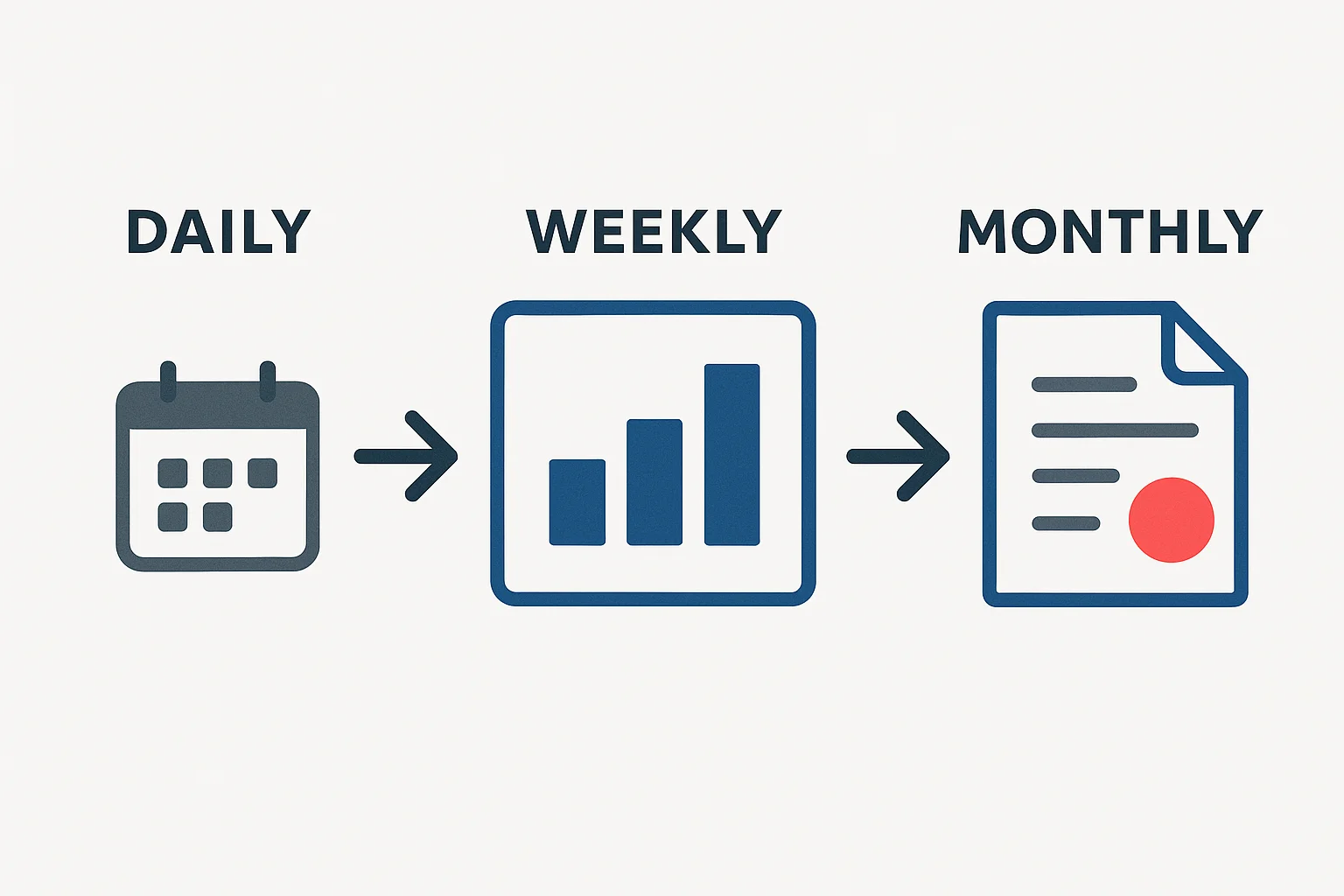
Weekly Summary
Analyze:
- Total idle time hours
- Most common causes
- Cost impact
- Trends (improving or worsening?)
Action items: Address top 2-3 causes
Monthly Review
Calculate:
- Total idle time percentage
- Cost of idle time
- Progress on bottleneck fixes
- New bottlenecks emerged
Technology for Bottleneck Detection
Modern apps help identify bottlenecks automatically.
Features that help:
- Task duration tracking (planned vs actual)
- Idle time logging
- Photo timestamps (see when work happening)
- Resource allocation visibility
- Automatic bottleneck alerts
Example: App shows "Plastering task: planned 3 days, actual 7 days" → Investigate why.
Process Improvements to Prevent Bottlenecks
1. Look-Ahead Planning
Concept: Plan 2 weeks ahead, identify potential bottlenecks early.
Weekly meeting:
- What work is planned next week?
- What resources needed?
- What dependencies?
- What could go wrong?
- Mitigation plan?
2. Buffer Management
Strategic buffers:
- Material buffer (3-5 days stock of critical items)
- Time buffer (add 10-15% to schedules)
- Resource buffer (extra tools, backup workers)
Don't buffer everything (expensive). Buffer bottleneck resources.
3. Parallel Work Streams
Concept: While waiting for one thing, work on another.
Example:
- Ground floor plaster curing? Start first floor brick work.
- External work delayed by rain? Focus on internal work.
Requires: Good planning and coordination.
4. Cross-Training Workers
Concept: Workers skilled in multiple areas = fewer bottlenecks.
Example:
- Mason helpers also know basic carpentry
- Painters can do basic plastering
- Electrician helpers can do conduit work
Benefit: Flexibility to deploy where needed.
Conclusion
Bottlenecks are hidden profit killers. Finding and fixing them can improve productivity by 15-20% without adding resources.
Action plan:
- Observe your site for 2-3 hours this week
- Track idle time for one week
- Identify top 3 bottlenecks
- Implement fixes for #1 bottleneck
- Measure improvement
- Move to bottleneck #2
The gains compound. Fix one bottleneck, work flows faster, revealing the next bottleneck. Keep improving continuously.
Learn More
Construction Management Expert
Senior Construction Consultant at Yojo
10+ years of experience
Reviewed on 8 January 2025
About Yojo Team
Construction management expert with 10+ years of experience helping Indian contractors build better businesses. Specialized in digital transformation for construction sites.