Introduction
Cash flow is not the same as profit. A residential or commercial job can look healthy on margin while the contractor struggles to pay wages on Friday because the last RA (running account) certificate is stuck with the architect, or because steel was procured upfront for the next slab. This guide explains practical cash-flow management for Indian construction sites in 2026: how to align labour payments, material purchases, and statutory dues with certified billing milestones, and how digital tools reduce leakage.
Quick links: Expense tracking best practices, House construction cost guide, Contractor app for attendance-linked payroll visibility.
1. Separate “Three Buckets” of Money
Successful contractors mentally (and in ledgers) split cash into:
- Site operations – wages, petty cash, small tools, fuel, hire charges.
- Materials & subcontractor – cement, steel, aggregates, rentals, specialist agencies.
- Statutory / tax – GST net position, TDS/TCS, PF/ESI where applicable, professional fees.
When bucket (3) is under-funded because everything sat in bucket (1), GST filing or subcontractor advances become painful. Use separate bank sub-accounts or labels in accounting software—even on small jobs.
2. Milestone Billing vs “Hope-Based” Cash
Align expected inflows to structural milestones: plinth, slab stages, blockwork, finishes. For each milestone:
- Quantity baseline – What was certified last time vs built this cycle?
- Retention – What percentage is held back and until when?
- Deductions – Advances to labour/subcontractor, damage, safety penalties.
If your DPR or daily reporting does not tie to quantities, billing arguments delay—and cash stalls.
3. Labour: Timing Wages to Attendance Truth
Daily-wage and piece-rate models both fail when attendance records disagree with payroll. Contractors who still use loose registers pay twice: once in wages and again in disputes.
- Pay cycles should match verified present days and agreed OT rules.
- For multi-site firms, roll up attendance before releasing bank transfers.
- Cross-check against labour rates for your state when budgeting—not as legal advice, but as a sanity check on quotes.
Digital labour attendance with exportable records reduces “Friday surprises” and supports reconciliation with muster requirements.
4. Materials: Purchase Discipline
Cash flow dies when material arrives before funding for that stage is secured.
- Negotiate credit where possible; otherwise align purchases to milestone receipts.
- Track wastage; material mistakes often hide in “extra” orders after poor measurement.
- For owner-funded homes, agree advance schedule with clients before locking steel/cement lots.
5. GST and TDS: Plan for the Net Position
GST in construction is not “extra money”—it is collect now, remit later (with input credit timing). Model:
- Output tax on bills received
- Input credit on eligible purchases
- TDS/TCS impacts on cash actually received
A monthly GST calendar reminder (due dates, reconciliation) avoids using operational cash to cover tax surprises.
6. Retention and Final Bills
Retention is a forced savings account held by the client. Contractors should:
- Show retention explicitly in cash-flow forecasts
- Track defect liability end dates
- Document snag clearance so final bills release faster
7. Tools: From Notebook to Audit-Ready
Spreadsheets work until you have more than one site or more than one supervisor. Minimum viable stack:
- Daily site log (tasks, delays, photos)
- Expense tagging by project
- Attendance → wage linkage
- Export for CA / auditor
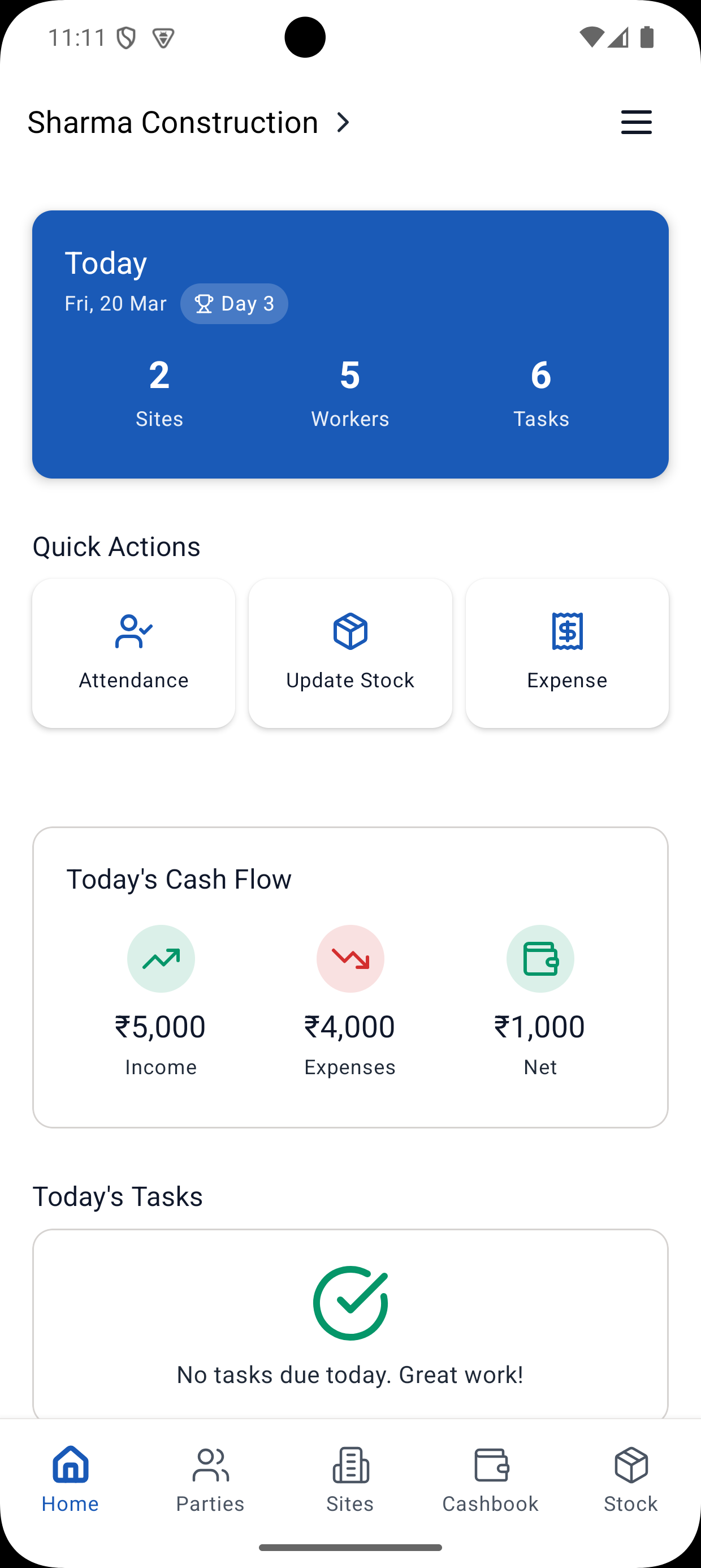
The Yojo contractor app is built for offline-first sites and multi-project roll-ups—use it alongside your accountant’s GST ledgers, not as a replacement for statutory filing advice.
8. Checklist: Monthly Cash Flow Review
- RA / certified value vs billed vs received
- Retention balance and release dates
- Labour – man-days × rates vs paid
- Material – major orders vs delivered vs paid
- GST/TDS – net payable or receivable next 45 days
- Contingency – 3–5% of project value for weather, rate spikes, rework
Conclusion
Construction cash flow in India rewards discipline more than optimism: split buckets, tie wages to verified attendance, align material buys to milestones, and treat GST/retention as first-class citizens in your forecast. Start with the checklist above; deepen cost skills with our house construction cost and labour rate pillars, then operationalize on site with structured tracking tools.
உங்கள் கட்டுமான வணிகத்தை மாற்றத் தயாரா?
இன்றே Yojo உடன் உங்கள் தளங்களை திறமையாக நிர்வகிக்கத் தொடங்குங்கள்.
Yojo இலவசமாக முயற்சிக்குங்கள்Construction Management Expert
Senior Construction Consultant at Yojo
10+ years அனுபவம்
மறுஆய்வு செய்யப்பட்ட தேதி 23 மார்ச், 2026
Yojo Team பற்றி
10+ ஆண்டுகள் அனுபவத்துடன் கூடிய கட்டுமான மேலாண்மை நிபுணர், இந்திய குத்தகைதாரர்களுக்கு சிறந்த வணிகங்களை உருவாக்க உதவுகிறார். கட்டுமான தளங்களுக்கான டிஜிட்டல் மாற்றத்தில் நிபுணத்துவம்.
தொடர்புடைய பக்கங்கள்
கட்டுமான மேலாண்மை ஆப்
தொழிலாளர், பொருட்கள் மற்றும் தள பணிக்கான எளிய ஆப்
பல தள கட்டுமான ஆப்
ஒரே இடத்தில் உங்கள் அனைத்து கட்டுமான தளங்களையும் கண்காணிக்கவும்
ஆஃப்லைன் கட்டுமான ஆப்
கட்டுமான தளங்களில் இணையம் இல்லாமல் வேலை செய்கிறது
ஒப்பந்ததாரர் ஆப்
தொழிலாளர் மற்றும் கட்டுமானத்திற்கான இந்தியாவின் #1 ஒப்பந்ததாரர் ஆப்
தொழிலாளர் ஆப்
கட்டுமானத்திற்கான வருகை, ஊதியம் மற்றும் சம்பளம்
இந்தியாவின் சிறந்த ஒப்பந்ததாரர் ஆப்கள்
ஒப்பந்ததாரர் ஆப்களின் முழு ஒப்பீடு
Explore by City
Frequently Asked Questions
காத்திருப்புப் பட்டியலில் சேரவும்
நாங்கள் வெளியிடும்போது முதலில் அறியுங்கள்.
காத்திருப்புப் பட்டியலில் சேரவும்